 |
| Gun reform advocates line Pennsylvania Avenue while attending the March for Our Lives rally March 24, 2018 in Washington, DC (AFP Photo/WIN MCNAMEE) |
New York (AFP) - The US gunmaker Remington filed for bankruptcy protection on Sunday, a day after marchers swarmed US cities nationwide to call for greater regulation of firearms.
But the
hard times now facing gun companies began in November 2016.
That was
when Donald Trump's surprise election victory in the US led to a sudden drop in
US firearms demand, which had been robust until then as gun owners stockpiled
in anticipation of a Hillary Clinton presidency.
With Trump
an avowed gun rights supporter with boasts of warm ties to the National Rifle
Association, in office, gun enthusiasts slowed purchases, causing a glut.
Massive discounting and deep layoffs at firearms companies soon followed.
Gunmakers
now face intensifying public scrutiny following the February 14 Florida school
shooting that left 17 dead, sparking Saturday's "March for our
Lives."
Retailers
such as Dick's Sporting Goods and Walmart have moved to to distance themselves
from the extreme end of the political spectrum on gun rights -- with aversion
spreading to the financial sector as well.
But the
immediate problem facing Remington and other firearms companies is the
expectation for "new, lower levels of consumer firearm demand,"
American Outdoor Brands chief executive James Debney said earlier this month.
He said
"flattish" firearms sales could persist for another 12-18 months.
Headquartered
in North Carolina, Remington dates to 1816, making it one of the nation's
oldest gunmakers.
Besides
guns, it makes bullets and barrel equipment, employing 2,700 people at seven
facilities in the US and exporting to 52 countries, chief financial officer
Stephen Jackson said in a filing in US Bankruptcy Court in Delaware.
Remington
experienced a "significant decline in sales" over the last year when
demand "ultimately did not materialize" after the company boosted
output in 2016, Jackson said.
Operating
profits in 2017 dwindled to just $33.6 million, less than one third the level
just two years earlier, Jackson said.
Some
financers say no
On February
12, two days before the Parkland shooting, Remington signaled plans to file for
bankruptcy protection, saying it reached a preliminary agreement with its
creditors to allow the company to operate while it reorganizes.
Remington however encountered difficulty with efforts to expand its pool of financers for the period after the bankruptcy filing, according to Ari Lefkovits, managing partner of Lazard Freres, which was hired by Remington.
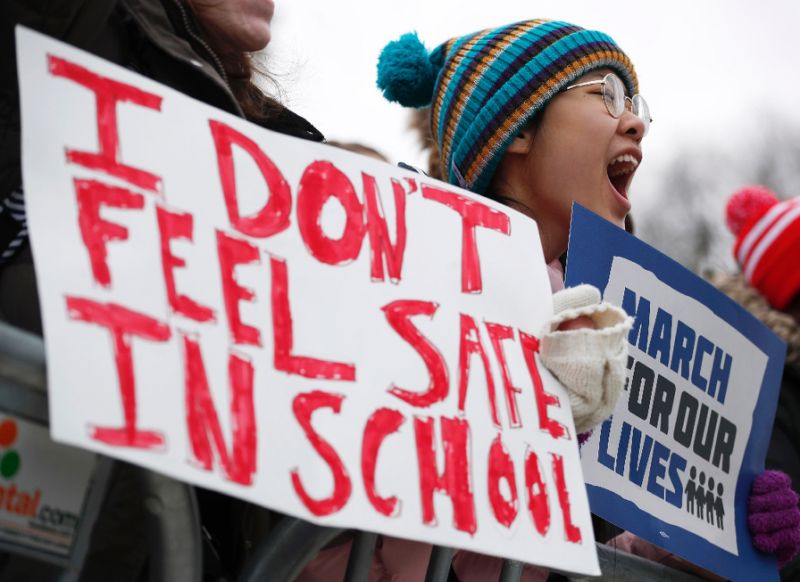 |
Protestors
chant during the March for Our Lives rally on March 24, 2018 in
Chicago, Illinois
(AFP Photo/JIM YOUNG)
|
Remington however encountered difficulty with efforts to expand its pool of financers for the period after the bankruptcy filing, according to Ari Lefkovits, managing partner of Lazard Freres, which was hired by Remington.
"Lazard
approached over 30 potential funding sources to provide such financing,"
Lefkovitz said. "The vast majority of lenders contacted, however,
indicated that they were reluctant to provide financing to firearms
manufacturers."
Remington
instead turned to its existing lenders, including JPMorgan Chase and Franklin
Advisers, Lefkovits said. Several others with long relationships with
Remington, including Bank of America and Wells Fargo, are also providing
financing during the propcess.
The
reorganization, considered a "prepackaged" bankruptcy because the
major parties have already reached agreement, would eliminate $775 million in
debt and shift to creditors control of new equity.
Besides the
financial incentive to stay in the transaction, banks involved in the
bankruptcy might face legal liabilities if they walked away now.
Bank of
America and JPMorgan declined to comment. Wells Fargo did not immediately
respond to request for comment.
The
bankruptcy comes amid intensifying pressure on major companies to take a stand
on guns.
Last week,
Citigroup became the first major US bank to unveil significant new policies on
guns, announcing it would require retail clients to bar sales to those under 21
or to people who have not passed a background check.
Citigroup
said it would also start "due diligence" among its gun manufacturing
clients to understand their operations and whether they are in line with
"common sense" gun policy.
Asset
manager BlackRock, the largest shareholder in several leading gun stocks, has
also signaled plans to intensify scrutiny.
It said in
a March 2 notice that it was taking steps to reach out to clients who do not
want to hold gun stocks and stepping up engagement with firearms executives on
their products.
No comments:
Post a Comment
Note: Only a member of this blog may post a comment.